
Is SEO about to become GEO? Or is AEO becoming the middle ground between the two?
This question naturally comes up as the way people search for information continues to change. For years, SEO has been about getting your website found in traditional search results. But now, people are also looking for direct answers and using AI tools like ChatGPT and Perplexity to discover information.
When it comes to getting organic visibility, SEO, AEO, and GEO are three different ways the same piece of content can get discovered.
They work together, not against each other. A single well-built, technically sound, clearly structured, backed-by-real-expertise page can perform across all three without you writing three separate versions of it.
Here’s what each one means, and how to build content that works across all of them.
What Is SEO (Search Engine Optimization)?
SEO is the process of improving your website so it ranks higher in search results for queries related to your business. It rests on three pillars:
- Technical SEO — fast, mobile-friendly, crawlable, easy for search engines to parse.
- On-page SEO — content that matches what people are actually searching for.
- Authority — other credible sites linking to yours.
The goal is simple: get found in search, get the click.
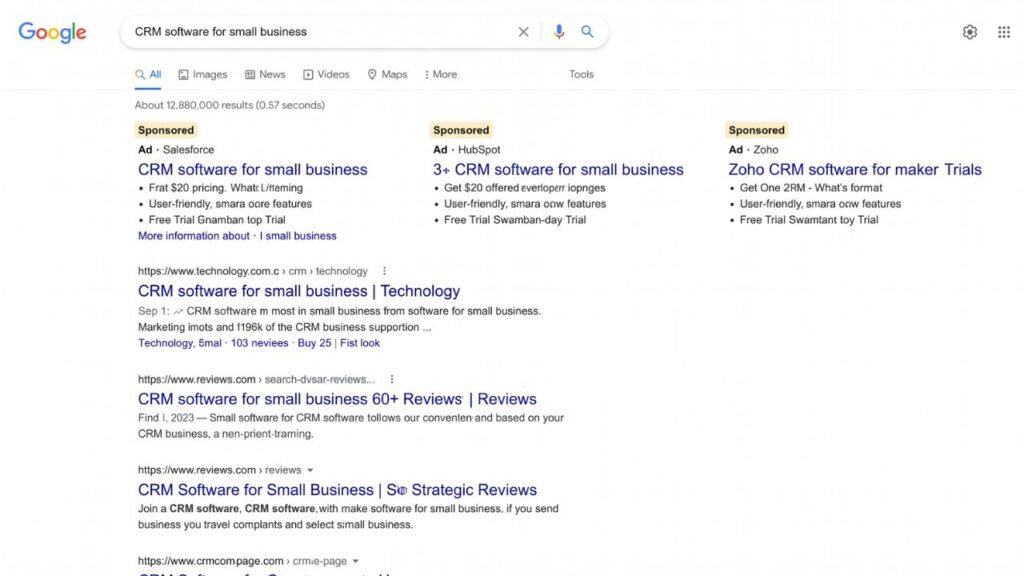
SEO is the foundation everything else builds on. Get your site fast, well-structured, and properly indexed, and you’re already set up to win at AEO and GEO too.
What Is GEO (Generative Engine Optimization)?
GEO is about improving your chances of being mentioned when someone uses an AI tool like ChatGPT, Google AI Mode, Perplexity, Gemini, or Claude to research something.
The key shift: there’s no page of ten results to choose from. The AI reads across sources, interprets the question, and generates one answer. So the question becomes: if someone asks an AI about this topic, is your content useful and clear enough to be the source it draws on?
GEO builds on the same fundamentals as SEO, with more weight on:
- Demonstrable expertise on the topic
- Comprehensive, genuinely useful content
- Facts that are easy to extract and verify
- Presence beyond your own domain — mentions on other sites, forums, reviews
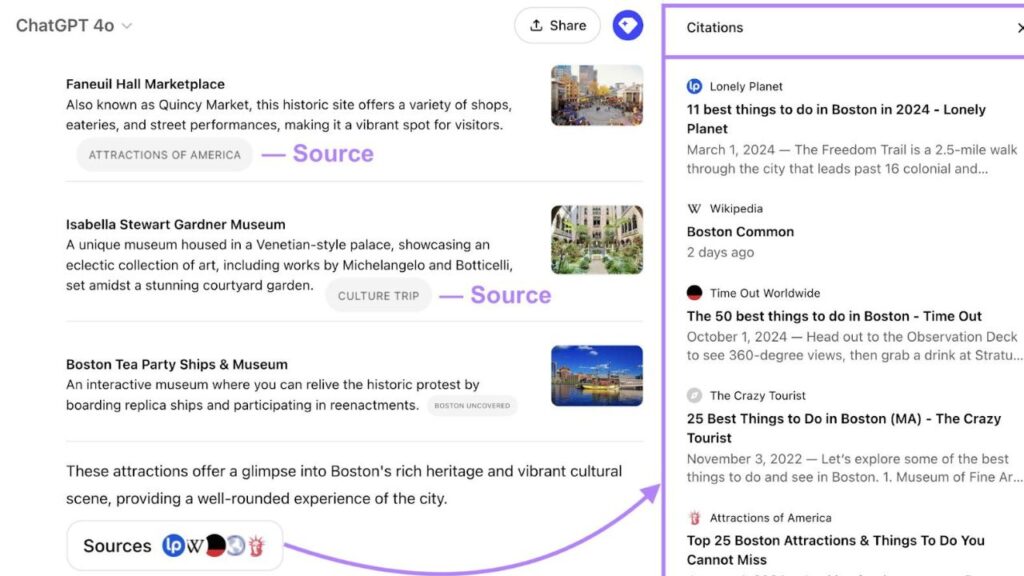
A mention in an AI answer builds brand visibility and trust even when the person doesn’t click through — your brand becomes part of the conversation right when someone is actively researching your category. That’s real value, separate from and in addition to direct traffic.
What Is AEO (Answer Engine Optimization)?
AEO means structuring your content so it’s easy for search engines and answer-focused systems to pull out and present as a direct answer featured snippets, “People Also Ask,” AI Overviews, voice assistants.
The core idea: instead of making the reader search through your whole article for the answer, you put the answer right where they can see it.
AEO-friendly content typically includes:
- A direct answer in the first 1-2 sentences after the heading
- Question-based headings
- Lists, tables, clear definitions
- FAQs
- Structured data (FAQ or HowTo schema) where it’s genuinely applicable
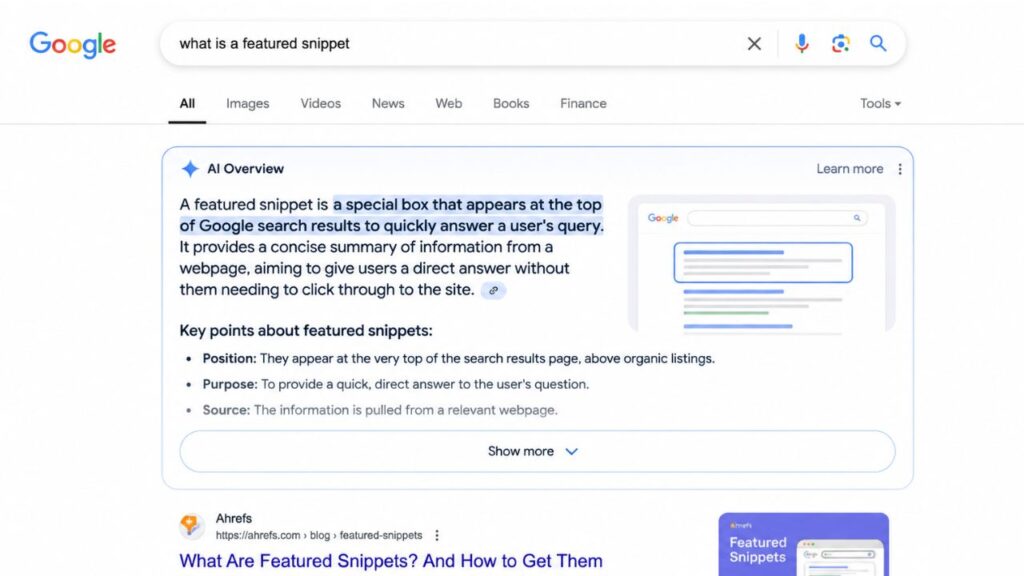
This is where traditional and AI-driven search overlap most directly: you’re still writing for search engines, but structuring it so machines can lift and present it cleanly as an answer.
SEO vs AEO vs GEO: Side by Side
| Key Differences | SEO | AEO | GEO |
| Main goal | Rank higher in search results | Get selected as a direct answer | Get mentioned in AI-generated answers |
| Where it appears | Google, Bing results | Featured snippets, People Also Ask, AI Overviews, voice search | ChatGPT, Perplexity, Gemini, Claude, Google AI Mode |
| What the user does | Clicks a result | Reads the answer, may click | Reads the AI response |
| What it needs | Technical SEO, keywords, links, authority | Clear structure, direct answers, relevant schema | Expertise, useful content, mentions across the web |
| How you measure it | Rankings, traffic, conversions | Visibility in answer features and AI Overviews | Brand mentions, citations, appearances in AI responses |
| Drives traffic? | Yes, primarily through clicks | Yes, often | Builds visibility and trust, sometimes traffic too |
You don’t need three separate content pipelines to cover all three. One genuinely useful, well-structured, technically sound page that answers the obvious questions clearly and is backed by real authority supports SEO, AEO, and GEO at the same time. That’s the throughline for the rest of this piece.
SEO Isn’t Dead: Search Has Just Evolved
Search has already gone through several shifts: desktop to mobile, mobile to voice, and now voice/typed search sitting alongside AI tools. The underlying want hasn’t changed; people still want reliable, useful answers, and search engines and AI systems still need good sources to pull from.
What’s changed is the number of places your content can now surface:
- Traditional search results
- Featured snippets / AI Overviews
- AI-generated answers with citations
- Category mentions when someone’s researching a purchase
More surfaces means more opportunities. The goal is building content that shows up wherever your audience is searching.
How to Improve Your Chances in AI Overviews and LLMs
1. Answer the question early. If your heading asks “What is GEO?”, answer it in the sentence right after then go deeper. This helps readers and AI systems alike find the answer fast.
2. Use question-based headings. “What Is GEO?” outperforms “GEO Overview” it matches how people actually phrase queries.
3. Structure for extraction. Headings, short paragraphs, lists, tables, FAQs, and schema where it’s relevant. Clean structure makes content dramatically easier for machines to parse and present.
4. Build depth with pillar content. One well-built pillar page that covers a topic thoroughly, with supporting pages linked around it, consistently outperforms a scatter of shallow posts. This is one of the most effective levers for AI Overview visibility: a pillar page that covers the obvious questions, the related questions, and real examples gives both Google and LLMs a single comprehensive source to pull from.
5. Extend beyond your own domain. Mentions on industry publications, review platforms, forums, and Reddit shape how AI systems and people understand your brand. This is why digital PR is now a core part of AI visibility work, not a separate track.
6. Keep facts current. Fresh, accurate numbers and claims keep content trustworthy for both readers and AI systems, especially on topics where numbers or regulations shift often.
7. Invest in technical SEO. A fast, well-organized, easy-to-crawl site is one of the most effective and most overlooked levers for AI Overview inclusion. When search engines can index your site cleanly, everything downstream works better.
8. Track visibility across all the signals. Rankings and traffic still matter, and now sit alongside: is your brand showing up in AI answers, is the information accurate, which topics generate mentions, and which tools are citing you.
AI Overview citations and LLM mentions respond directly to deliberate work; a well-structured pillar page and a genuinely fast, user-friendly site both improve your odds of being the source Google’s AI Overview pulls from. Tools like ChatGPT and Perplexity work off their own retrieval and crawling logic, so it’s worth tracking each platform’s citations separately, but the same core inputs (clear structure, real depth, a crawlable site) move the needle across all of them.
FAQs
Q. Do I need separate strategies for SEO, AEO, and GEO?
No. Useful, well-structured content with direct answers, a technically sound site, and real topical authority covers all three at once.
Q. Does an AI mention still help if it doesn’t drive traffic?
Yes. Even without a click, the mention builds brand recall and trust at the exact moment someone is researching your category — that visibility compounds over time.
Q. What’s the single most important thing for AI Overviews?
Clear answers, genuine expertise, a technically healthy site, and information that’s easy to verify. Get those right consistently, and visibility follows.
Related: Top 10 Benefits of SEO for Business: Complete Growth Guide for 2026
Leave a Reply